|
|
►►►其它中学
Harrow School 哈罗学校,Harrow on the Hill, Harrow, Middlesex HA1 3HW
Tel: 020 8872 8007 Fax: 020 8872 8012
Website: www.harrowschool.org.uk
• BOYS, 13–18, Boarding
• Pupils 785, Upper sixth 150
• Termly fees £7345
• HMC
• Enquiries/application to the Admissions Secretary
What it’s like
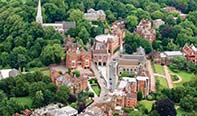
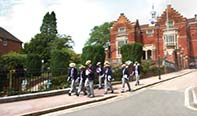
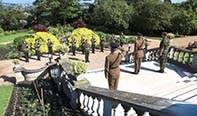
Founded in 1572 under a royal charter of Queen Elizabeth, it is scattered over
Harrow Hill across some 360 acres, only 10 miles from the City of London. There
is no campus; the school is in effect a kind of village, spread along the High
Street and the slopes of the Hill and includes a lake, a conservation area, a
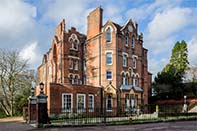
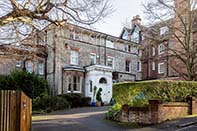
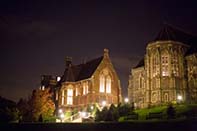
golf course and a farm. First-class accommodation and facilities of every kind
are provided. The school has a notable reputation for its teaching and all-round
academic achievements. Standards are high and examination results excellent. The
majority of sixth formers take a gap year before going on to university; large
numbers go on to Oxbridge. It is very strong in music, art and drama. There is
an extensive variety of sports and games and a number of county and national
representatives. There are numerous extra-curricular activities, catering for
most interests.
School profile
Pupils & entrance
Pupils: Age range 13–18; 785 boarding boys.
Entrance: Main entry age 13, with some at 16. Approx 20% are sons of
former pupils. Common Entrance used; for sixth-form entry, interview, school
report and 6 GCSEs at grade A. No special skills or religious requirements.
Feeder schools include Caldicott, Cothill, Edge Grove, Ludgrove, Papplewick,
Summer Fields, Sunningdale, Wellesley House.
Scholarships, bursaries & extras 30 pa scholarships at 13, value
10%–50% fees (can be supplemented further if proven need): 15 academic, 2 art, 9
music, 4 all-rounder. Parents not expected to buy textbooks; extras include
music tuition, outings.
Parents 15+% in industry or commerce; 30+% are doctors, lawyers etc;
10+% in armed services. 40+% live within 30 miles; up to 10% live overseas.
Head & staff
Head Master: Barnaby Lenon, in post from 1999. Educated at Eltham College
and the universities of Oxford and Cambridge. Previously Headmaster of Trinity
School, Croydon, Deputy Head Master at Highgate and Head of Geography at Eton.
Teaching staff: 85 full time, 36 part time (almost all music). Annual
turnover 10%. Average age 30.
Exam results
GCSE: In 2003, 160 pupils in fifth: all gained at least grade C in 8+
subjects. Average GCSE score 72 (68 over 5 years).
A-levels: 146 in upper sixth: 25% passed in 4+ subjects; 75% in 3
subjects. Average final point score achieved by upper sixth formers 412.
University & college entrance 99% of 2003 sixth-form leavers went on
to a degree course (50% after a gap year), 20% to Oxbridge. 8% took courses in
medicine, dentistry & veterinary science, 30% in science & engineering, 15% in
law, 35% in humanities & social sciences, 5% in art & design. A few go directly
in to the armed services, agriculture.
Curriculum GCSE, AS and A-levels. 25 AS/A-level subjects.
Sixth form: Most sixth formers take 4 subjects at AS-level (75% mixing
arts and sciences), 3 at A-level. No general studies. Key skills are integrated
into courses; not examined except ICT.
Vocational: Work experience available.
Special provision: Full-time special needs co-ordinator.
Languages: French, German, Spanish, Italian, Japanese and Mandarin
offered at GCSE and A-level. Regular exchanges for sixth form.
ICT: Taught both as a discrete subject (2 lessons/week in Year 9) and
across the curriculum. 460 computers for pupil use (8 hours a day), all
networked and with e-mail and internet access. Fibre-optic cabling to all
academic departments & boarding houses.
The arts
Music: Up to 66% of pupils learn a musical instrument; instrumental exams
can be taken. Some 10+ musical groups including orchestra, wind band, concert
band, string orchestra, choral society, choirs etc. Finalists in National
Schools Chamber Music Competition in the past 6 years.
Drama: Drama offered; A-level theatre studies may be taken. Some pupils
are involved in school productions and majority in house/other productions.
Annual Shakespeare production.
Art & design: On average, 40 take GCSE, 30 A-level. Design, pottery,
photography, sculpture also offered. Regular entrants to art college.
Sport & activities
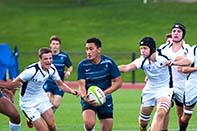
Sport: Rugby, cricket, soccer expected in early years. Optional:
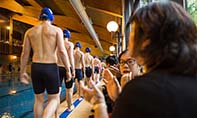
shooting, swimming, water polo, athletics, tennis, golf, badminton, fives,
rackets, squash, fencing, cross-country, archery, volleyball, basketball, polo.
Activities: Choice between CCF, community service or conservation. Up to
30 clubs, eg academic, art, history, chess, fishing, conservation, film,
climbing, photography, debating.
School life
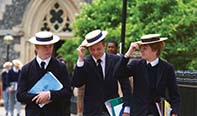
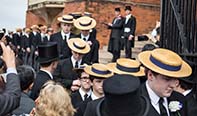
Uniform: School uniform worn throughout.
Houses & prefects: Each Housemaster appoints head of house, house
prefects (house monitors). School monitors appointed by Headmaster. Philathletic
Club (senior boys organising games), Guild (senior boys organising cultural
activities).
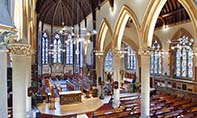
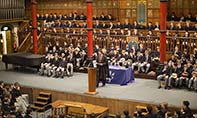
Religion: All Anglican boys attend weekday chapel twice a week and once
on Sunday; Holy Communion celebrated daily. 3 chaplains (2 C of E, 1 RC);
visiting instructors for Jewish and Muslim pupils. Thought for the Day option to
Chapel.
Social: Joint choral works, plays with local girls’ schools; visits to
London for concerts, plays etc. Trips to eg Jordan, Greece, Austria, Namibia;
recent sports tours to eg Zimbabwe, South Africa, Malaysia, India; exchanges
with schools in Germany. School shops sell clothes, books, tuck and photographic
items. No tobacco allowed.
Discipline Pupils failing to produce prep once might expect to repeat
it plus extra work; those caught in possession of or smoking cannabis would
expect expulsion.
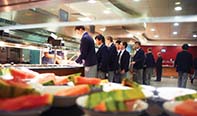
Boarding 70% have own study bedroom, 30% share with one other. Houses
of approximately 70. Qualified nurses in medical centre. Central dining room.
Pupils can use house kitchens for snacks. 2 weekend exeats per term and
half-term. Visits to local town allowed with housemaster’s permission.
Alumni association is run by Suzanne Benson, c/o the School.
Former pupils Winston Churchill; King Hussein; Lord Shaftesbury; 7
Prime Ministers; Nehru; Terence Rattigan, Sir Keith Joseph; Earl of Lichfield;
Lord Deedes; Lord (Robin) Butler; Earl Alexander of Tunis; General Sir Peter de
la Billière; Richard Curtis.
|