|
|
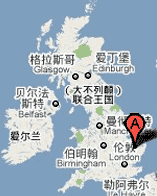
Culford School 卡尔福德学校 , Bury St Edmunds,
Suffolk IP28 6TX
Tel: 01284 728615 Fax: 01284 728631
Website: www.culford.co.uk
• CO-ED, 2–18 Day, 8–18 Boarding (full & weekly)
• Pupils 680, Upper sixth 60
• Termly fees £2275–£4095 (Day), £4850–£6283 (Boarding), £3702–£6283 (Weekly)
• HMC, IAPS
• Enquiries/application to the Admissions Officer
What it’s like
Founded in 1881 as a boys’ school, it first accepted girls in 1972 and is now
fully co-educational. It has a splendid site 3 miles north of Bury St Edmunds.
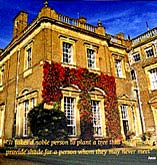
The main building is Culford Hall, a palatial 18th-century mansion (formerly the
seat of the Earl Cadogan) in 480 acres of beautiful gardens and parkland.
Numerous modern extensions include a sports complex, design and arts block, a
fine library, and a science centre. The prep school is also in the park. It is a
Methodist foundation but all denominations and none are welcome. The school has
a deep-rooted respect for tradition in teaching methods, manners and behaviour
and sees education as something that goes on outside as well as in the
classroom. It seeks to establish a partnership with parents and expects pupils
to work hard and make the most of their abilities whether they are outstanding
academically or not; examination results are good. The music and drama
departments are very vigorous and there are many outdoor pursuits (including
Duke of Edinburgh’s Award and world-wide expeditions). Sport and games are
played to high standards (many county and regional representatives) and there
are close community service ties with the town.
School profile
Pupils & entrance
Pupils: Total age range 2–18; 680 pupils, 480 day (260 boys, 220
girls), 200 boarding (125 boys, 75 girls). Senior department 13–18, 400 pupils
(220 boys, 180 girls).
Entrance: Main entry ages 2–8, 11, 13 and 16. Common Entrance and own
exam used; for sixth-form entry, 5 GCSEs (grade B in subjects taking on to
A-level). No special skills or religious requirements. Many senior pupils from
own prep.
Scholarships, bursaries & extras 17 pa scholarships, up to 50% of
fees: 9 academic, 4 all-rounder, 1 art, 3 music, 1 sport (2 at 11, 7 at 13, 3 at
16, 2 at other ages). 18 pa discretionary bursaries; Forces' bursaries. Parents
not expected to buy textbooks; few extras.
Parents 70+% live within 30 miles; 12% live overseas.
Head & staff
Headmaster: Julian Johnson-Munday, in post from 2004. Educated at Norwich
School and the universities of Leicester and Durham (MBA). Previously Deputy
Headmaster at Hill High School, London.
Teaching staff: 76 full time, 6 part time. Annual turnover 8%. Average
age 38.
Exam results
GCSE: In 2003, 74 pupils in upper fifth: 89% gained grade C or above in
5+ subjects. Average GCSE score 54 (over 5 years). A-level: 60 in upper sixth:
45% passed in 4+ subjects; 42% in 3; 8% in 2 subjects. Average final point score
achieved by upper sixth formers 338.
University & college entrance 90% of 2003 sixth-form leavers went on
to a degree course (6% after a gap year), 5% to Oxbridge. 5% took courses in
medicine, dentistry & veterinary science, 20% in science & engineering, 15% in
law, 45% in humanities & social sciences, 10% in art & design, 5% in vocational
subjects eg physiotherapy, psychology. Others typically go on to eg financial,
estate agency work.
Curriculum GCSE, AS and A-levels. 23 AS-level subjects, 20 A-level.
Sixth form: Most sixth formers take 4 subjects at AS-level, 3 at A-level;
A-level general studies optional in addition. Key skills integrated in subjects.
Vocational: Work experience available; also RSA stages 1 and 2 Clait.
Special provision: For dyslexia, ESL.
Languages: French, German and Spanish offered to GCSE and A-level (French
compulsory from age 5 to Year 9). Exchanges to France and Germany.
ICT: Taught both as a discrete subject (2 lessons/week) and across the
curriculum. 100 computers for pupil use (9 hours a day), majority networked and
with email and internet access. Most pupils take Clait.
The arts
Music: Up to 50% of pupils learn a musical instrument; instrumental exams
can be taken. Some 12 musical groups including orchestras, choirs, choral
society, wind band etc. 2 pupils within last 5 years in National Youth
Orchestra; choral scholarship to Cambridge, violin scholarship to Royal Northern
College of Music.
Drama & dance: Drama and dance offered. GCSE drama, LAMDA, MIDDA exams
may be taken. Majority of junior, some senior pupils are involved in school
productions and house/other productions.
Art & design: On average, 24 take GCSE, 8 A-level. Design, pottery,
textiles, photography, printmaking, scenery/props making, history of art also
offered.
Sport & activities
Sport: PE (wide range of mainly indoors activities) and swimming
compulsory. Optional: rugby, hockey, cricket, tennis, athletics, swimming,
rounders, badminton, squash, volleyball, basketball, water polo, aerobics,
gymnastics etc. GCSE may be taken. National representatives in rugby, hockey
(boys and girls); regular county and regional successes for teams and
individuals at hockey, rugby, cricket, netball.
Activities: Pupils take bronze, silver and gold Duke of Edinburgh’s
Award; over 60 pupils registered. CCF (RAF) and community service optional. Over
60 clubs, eg chess, aviation, arts, aerobics, badminton, recorder, science,
expedition (trips to eg Borneo, Himalayas, North Africa).
School life
Uniform: School uniform worn throughout.
Houses & prefects: Competitive houses. Prefects, head boy and girl, head
of house and house prefects, nominated by staff and pupils, appointed by the
Headmaster.
Religion: Religious worship compulsory; a Methodist foundation.
Social: Some organised local events and trips abroad. Upper sixth allowed
to bring own car, bike or motorbike to school. Meals self-service. School shop.
No tobacco or alcohol allowed.
Discipline Punishments include: detentions (offences related to
academic work); work units, withdrawal of privileges (other offences); fines
(smoking); gating (breaking bounds); suspension/expulsion, both rare (drug
offences, gross bullying, cheating, stealing). School sees discipline primarily
as a pastoral concern and this attitude affects the reaction to breaches of
discipline.
Boarding Most share study bedrooms; none in large dormitories.
Single-sex houses, senior (13–18) and prep (8–13). Resident qualified medical
staff. Central dining room. Pupils can provide and cook own food. 2 exeats each
term. Visits to the local town allowed.
Alumni association is run from the Foundation Office at the school.
Former pupils Sir David Plastow (formerly Vickers); Admiral Sir Derek
Reffell; John Motson (sports commentator); Judy Aslett (foreign correspondent
ITN); Gary Newbon (Head of Sport, Central TV).
|