英中教育 Anglo-Chinese Education Consultancy

基督学院

Christ College


►►►其它中学

Christ College,基督学院  Brecon, LD3 8AG
Tel: 01874 615440 Fax: 01874 615475
Website: www.christcollegebrecon.com
• CO-ED, 11–18, Day & Boarding (full & weekly)
• Pupils 320, Upper sixth 57
• Termly fees £3290–£4350 (Day), £4385–£5605 (Boarding)
• HMC
• Enquiries to the Admissions Registrar, applications to the Headmaster

What it’s like

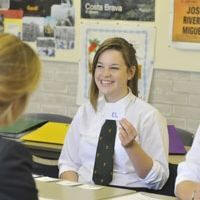
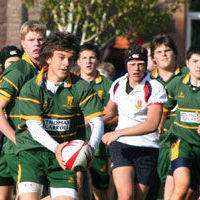
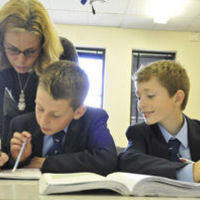
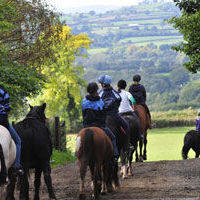
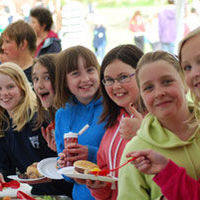
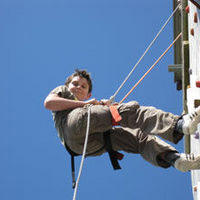
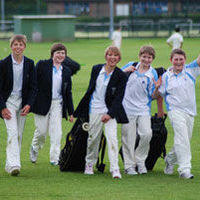
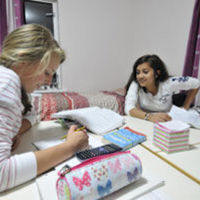
Founded by Henry VIII in 1541, it has a magnificent site on the River Usk just to the north of the Brecon Beacons and a couple of minutes’ walk from the pleasant market town of Brecon. The college chapel is part of the original Dominican friary, as are the two dining halls. The school enjoys handsome and well-equipped modern buildings in beautiful grounds: all lie within a designated national park. During the last ten years, there have been major developments and extensions – notably refurbishment of boarding houses, a fitness suite, improved facilities for IT, art, pottery and photography, and an astroturf pitch. Now fully co-educational; girls were accepted throughout the school in 1995 after many years in the sixth form. Pupils of all faiths are accepted: the Anglican liturgy is used in services. Importance is attached to spiritual education. A small school with a large staff, (a very favourable staff:pupil ratio of about 1:8) and examination results are good. Performing arts are strong. Societies and clubs cater for an extremely wide range of needs. Sports and games are very well organised and the college has a distinguished record in many, particularly rugby, cricket, netball and cross-country. There is a vigorous CCF contingent and much emphasis is put on outdoor pursuits, leadership and self-reliance. It has an impressive record in the Duke of Edinburgh’s Award Scheme.

School profile


Pupils & entrance

Pupils: Age range 11–18; 320 pupils, 91 day (57 boys, 34 girls), 229 boarders (161 boys, 68 girls).
Entrance: Main entry ages 11, 13 and 16. Common Entrance and own exam used; for sixth-form entry, 6 GCSEs at least grade C (grade B preferred in sixth-form subjects). Skill in sport, music, drama an advantage. No religious requirements, but school is Anglican. Most new pupils at 11 from state schools, few at 13. Feeder schools include Cradoc CP School at age 11; Moor Park (Ludlow), St John's-on-the-Hill (Chepstow) at 13.

Scholarships, bursaries & extras
38 pa scholarships, awarded at 11, 13 or 16 (value 10%–50% fees): 27+ academic, others all-rounder, sport, art, music, rugby, science, medicine/pharmacology. Variable number of bursaries (age 13 upwards), including for clergy and forces children. Parents not expected to buy textbooks; policy of no compulsory extras.

Parents
Up to 15% live within 30 miles; up to 20% live overseas.

Head & staff

Headmaster: D P Jones, appointed in 1996. Educated at Midsomer Norton Grammar School and Cambridge University (geography). Previously Senior Master and Housemaster at Sherborne and Head of Geography and rugby coach at Downside. Also A-level examiner in geography; played rugby for Bath. Publications: Hydrology (an A-level text-book).
Teaching staff: 35 full time, 3 part time. Annual turnover 8%. Average age 39.

Exam results

GCSE: In 2003, 45 pupils in fifth: 80% gained at least grade C in 8+ subjects; 16% in 5–7. Average GCSE score 57 (56 over 5 years).
A-levels: 57 in upper sixth: 14% passed in 4+ subjects; 81% in 3; 4% in 2 subjects. Average final point score achieved by upper sixth formers 355.

University & college entrance
93% of 2003 sixth-form leavers went on to university (18% after a gap year), 7% to Oxbridge. 9% took courses in medicine, dentistry & veterinary science, 31% in science & engineering, 53% in humanities & social sciences, 6% in art & design. Others typically go on to careers eg retailing or to art college.

Curriculum
GCSE, AS and A-levels. 21 AS/A-level subjects.
Sixth form: Most sixth formers take 4 subjects at AS-level, 3 at A-level, wide variety of courses and combinations of arts/sciences; in addition, general studies AS and A-level optional. 17% take science A-levels; 12% arts/humanities; 71% both. Key skills integrated into sixth-form courses.
Special provision: EAL available (offered 4 periods per week without charge in first year of entry); specialist tutor for mild dyslexia.
Languages: French, Spanish and Welsh at GCSE, AS and A-level. Frequent exchanges (France, Spain, Germany). Number of European pupils in school.
ICT: Taught as a discrete subject (1 lesson/week in Years 7–9) and as an option for GCSE; also across the curriculum, eg research tool in history, geography and languages. 46 computers for pupil use (4+ hours a day), all networked and with email and internet access. Some 15% of pupils have their own PC/laptop.

The arts

Music: Over 50% of pupils learn a musical instrument, and exams are taken. Some 10 musical groups including strings, choirs, orchestra, brass groups, wind group and jazz band. 1 girl recently won vocal scholarship to RCM.
Drama & dance: Both offered. Some pupils are involved in school productions and house/other productions. Recent productions of A Comedy of Errors, The Venetian Twins, The Real Inspector Hound, The Canterbury Tales and ‘Gizmo’.
Art & design: On average, 22 take GCSE, 7 AS-level, 8 A-level. Design, pottery, photography, silkscreen, sculpture, printmaking also offered.

Sport & activities

Sport: Basketball, cricket, netball, tennis, volleyball, gymnastics, athletics, rugby, hockey, soccer, squash, badminton compulsory to age 14. Optional: swimming, canoeing, aerobics, sailing, climbing, golf, fencing, triathlon, horse-riding. GCSE and A-level PE may be taken. Several Welsh schoolboy caps in rugby and cricket. Over 20 internationals in 10 different sports in last 3 years.
Activities: Pupils take bronze, silver and gold Duke of Edinburgh’s Award. CCF compulsory for 2 years at age 13, community service for 1 year at 16 (and optional otherwise). Over 20+ clubs, eg stage management, ornithology, ballet, railway modelling, Crusaders, shooting.

School life

Uniform: School uniform worn; some variations allowed in sixth form.
Houses & prefects: Competitive houses. Prefects, head boy/girl, head of house and house prefects – appointed by Head.
Religion: Compulsory attendance at religious worship.
Social: Large choral society. CCF linked with Army locally. Organised ski trips and exchange systems. Pupils allowed to bring own bike to school. Meals self-service. School shop. Sixth-form centre including bar; no private drink or tobacco allowed.

Discipline
Pupils failing to produce homework once would be expected to get it done by a deadline with extra work; any caught smoking cannabis on the premises might well be expelled.

Boarding
20+% have own study bedroom, 20+% share (with 1 other); 45+% in dormitories of 6+. Co-educational junior house (11–13 years), others single-sex: 3 boys’ boarding houses (approx 60), same as for competitive purposes; 2 girls’ houses. Resident medical staff. Central dining room. Pupils can provide and cook snacks. Some flexi-boarding and weekly boarding. Many day pupils change to boarding. Limited visits to local town allowed (number increasing with age).

Alumni association
is run by John Payne, OBA Secretary, at the school Tel: 01874 615462

Former pupils
P R Watkins (film producer); Gp Capt R M Thomas (Red Arrows); Roscoe Howells (author); Judge Robin David; Simon Hughes MP; Robert Ackerman and Andrew Lewis (rugby footballers); Jamie Owen (BBC presenter); Sir Barrie Stephens (Siebe plc); David Mercer and Oliver Hides (BBC sports commentators); Paul Brown (opera designer); Mark Evans QC; Air Vice-Marshal Peter Harris; Jonathan Smith (author and playwright); Paul Silk (Welsh Assembly Chief Clerk).

School profile


Pupils & entrance

Pupils: Total age range 8–18; 292 pupils, 81 day (43 boys, 38 girls), 211 boarding (100 boys, 111 girls). Senior department 11–18, 269 pupils (136 boys, 133 girls).
Entrance: Entry at any age. Admission by audition. Musical potential looked for; no religious requirements.

Scholarships, bursaries & extras
Aided pupil awards (on the government Music & Dance Scheme) for all entrants resident in UK for at least 2_ years prior to entry, value up to full fees – currently £21,963 pa (means-tested) plus travel and uniform grants. Parents not expected to buy textbooks.

Parents
10+% live within 30 miles; up to 10% live overseas.

Head & staff

Head: Mrs Claire Moreland, in post from 1999. Educated at Devonport High School for Girls and Oxford University (modern languages). Previously Deputy Head and Housemistress of Rugby, Head of Department of Croydon High and modern language teacher at Sevenoaks School. Publications: German textbook.
Teaching staff: 41 full time, 80 part-time. Annual turnover 8%. Average age 42.

Exam results

GCSE: On average, 36 pupils in upper fifth: all gain at least grade C in 5–8 subjects. Average GCSE score 52 (51 over 5 years).
A-levels: 56 in upper sixth: 20% pass in 4+ subjects, 50% in 3 and 30% in 2. Average final point score achieved by upper sixth formers 301.

University & college entrance
The majority of sixth-form leavers go on to music colleges. 35% go on to a degree course (6% after a gap year), 20% to Oxbridge: 2% take courses in medicine, law and languages, 6% in science & engineering, 12% in humanities & social sciences, 2% in art & design, 80% in music.

Curriculum
GCSE, AS and A-levels. 14–15 AS/A-level subjects (including music technology).
Sixth form: Most sixth formers take 3 subjects at AS-level, 2–3 at A-level; in addition all take music, 40% take music technology. 70% take A-levels in arts/humanities; 30% in both arts and sciences. 3 main key skills taught as compulsory, discrete units in lower sixth; each student aims for accreditation in at least one skill.
Special provision: Tuition for ESL/dyslexic pupils.
Languages: French and German offered to GCSE, AS and A-level.
ICT: Taught across the curriculum. 30 computers for pupil use, networked and with email and internet access.

The arts

Music: All pupils learn a musical instrument; instrumental exams can be taken. Some 60 musical groups including duets, trios, quartets, quintets, wind band, percussion ensemble, chamber choir, chamber orchestra, symphony orchestra. 10 members of the National Youth Orchestra.
Drama: Drama offered. GCSE drama and A-level theatre studies (5 pa) may be taken. Some pupils are involved in school productions.
Art & design: On average, 8 take GCSE and A-level; 5 pupils per year take A-level. Pottery, photography also offered.

Sport & activities

Sport: Boxercise, running, trampolining, fitness training, swimming, squash, badminton, weight training, table tennis, rounders are optional sports.
Activities: Music in the community activities.

School life

Uniform: School uniform worn, some choice in sixth form.
Houses & prefects: No competitive houses. Prefects, head boy/girl, head of house and house prefects – appointed by the Head/heads of houses.
Religion: Assemblies and weekly (non-denominational) service in Manchester Cathedral. Sunday service is encouraged. RCs have own weekly instruction or service.
Social: Regular weekend outings for boarders. Organised choral/orchestral tours (about 2 per year). Meals self-service. School tuckshop. No tobacco or alcohol allowed.

Discipline
Pupils failing to produce homework once might expect a reprimand, extra work; policy of involving families early in pastoral, moral, disciplinary matters. Head has power of suspension or expulsion.

Boarding
39% share (2 to a room); 9% in rooms of 6. Single-sex houses of approximately 50. Resident and day-time nurses, 2 visiting doctors, school counsellors. Central dining room. Pupils can provide and cook own food in houses. Any number of weekend exeats. Visits to the city allowed.

Alumni association
is run by The Secretary, ‘Friends of Chetham’s’, c/o the school.

Former pupils
Peter Donohoe, Stephen Hough, Anna Markland, Leon McCawley, Tim Horton (all pianists); Grant Llewellyn, Daniel Harding (conductors); Wayne Marshall (organist); Mike Lindup (pop group – Level 42); Omar (Hammer) (soul singer); Max Beesley (films/TV), Guy Johnston (BBC Young Musician of the Year, 2000).


中英教育咨询中心(英国)

Anglo-Chinese Education Consultancy

Suite1, 5 Lisle Street, London WC2H 7BG U.K.

Tel: 0044 020 72872616  /  0044 078 31697116

  E-mail: uk@anglo-chinese.com


广州英中教育咨询有限公司

Guangzhou Anglo-Chinese Education Consultancy Ltd

广州市 天河路365号 天俊国际大厦 902室    P.C.:510620

Tel: 020 38847677 / 020 38847639

E-Mail: cn@anglo-chinese.com