|
|
►►►其它中学
Brighton College,布莱顿学院 Brighton,
East Sussex BN2 0AL
Tel: 01273 704200 Fax: 01273 704204
Website: www.brightoncollege.net
• CO-ED, 13–18, Day & Boarding (full & weekly)
• Pupils 700, Upper sixth 170
• Termly fees £4401 (Day), £6822 (Boarding), £5992 (Weekly)
• HMC, SHA
• Enquiries/application to the Director of Admissions
What it’s like
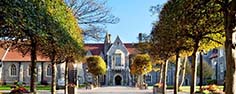
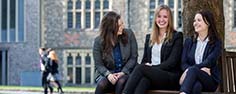
Founded in 1845, it stands on high ground in the Kemp Town district of Brighton.
It enjoys handsome buildings (the school chapel, which is in regular use, is
especially striking) in attractive surroundings with ample playing fields.
Originally a boys’ school, girls were first admitted to the sixth form in 1973,
and throughout the school in 1988. The teaching is of a high standard and
examination results are very good. It is a good all-round school, with plenty of
regard for the less talented. A dyslexia centre for some 100 intelligent
children, produces strong academic results. There is a school committee, elected
by pupils. Strong in music, art and drama; also in sports and games, with many
county representatives. It offers a wide range of activities and there is
considerable involvement in local community schemes. Full use is made of the
cultural amenities of Brighton.
School profile
Pupils & entrance
Pupils: Age range 13–18; 700 pupils, 575 day (385 boys, 190
girls), 125 boarding (75 boys, 50 girls).
Entrance: Main entry ages 13 and 16. Common Entrance used. Pupils with a
positive contribution to make in any sphere are welcomed. No religious
requirements but the college is a C of E foundation. 50% of intake from own prep
school.
Scholarships, bursaries & extras Some scholarships (including
academic, art, music), value 10%–50% of fees. Also bursaries for eg clergy or
forces children. Parents expected to buy textbooks.
Parents 60% live within 30 miles, up to 10% live overseas.
Head & staff
Headmaster: Dr Anthony Seldon, in post since 1997. Educated at Tonbridge
and at Oxford University (PPE), the LSE (PhD), King’s College, London (PGCE) and
Westminster University (MBA). Previously Deputy Headmaster at St Dunstan’s,
Catford, Head of History and General Studies at Tonbridge and Head of Politics
at Whitgift. Also Fellow of the Royal Historical Society and founded the
Institute of Contemporary British History. Publications: author/editor of many
books, including Churchill’s Indian Summer, Inside Number Ten, Major: A
Political Life, an authorised biography, The Foreign Office: An Illustrated
History, The Blair Effect and A New Conservative Century?, Public and Private
Education: the Divide Must End.
Teaching staff: 67 full time, 20 part time. Annual turnover 4%. Average
age 39.
Exam results
GCSE: In 2003, 120 pupils in upper fifth; 94% gained at least grade C in
8+ subjects. Average GCSE score 59 (60 over 5 years).
A-levels: 127 in upper sixth. Average final point score achieved by upper
sixth formers 327.
University & college entrance 97% of 2003 sixth-form leavers went on
to a degree course (30% after a gap year), 10% to Oxbridge. 12% took courses in
medicine, dentistry & veterinary science, 28% in science & engineering, 26% in
humanities & social sciences, 35% in art, drama and music.
Curriculum GCSE, AS and A-levels. 30+% take science/engineering
A-levels; 39% arts/humanities; under 30% a mixture.
Vocational: Work experience available: also some vocational
qualifications.
Special provision: Dyslexia centre for children assessed as dyslexic but
with high intelligence, to take a suitably adjusted GCSE course within the
normal curriculum, with the opportunity to proceed to A-levels.
Languages: French, German and Spanish offered to GCSE, AS and A-level.
Regular exchanges to France.
ICT: Taught both as a discrete subject (1–2 lessons/week in Years 7–9)
and across the curriculum. 90 computers for pupil use (12 hours a day), most
networked and with e-mail and internet access. Most pupils take Certificate of
Competence.
The arts
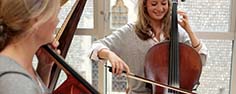
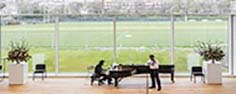
Music: Approx 40% of pupils learn a musical instrument; instrumental
exams taken. Some 9 musical groups including orchestra, choirs, concert band,
wind, brass, string ensembles. Members of Brighton and East Sussex youth
orchestras; finalists in National Chamber Music for Schools competition.
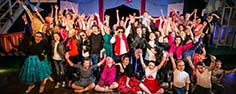
Drama: Drama offered. ESU public-speaking competitions. Many pupils are
involved in school productions. Recent productions of The Admirable Crichton, Me
& My Girl, Cabaret, Guys & Dolls, Timon of Athens.
Art & design: On average, 25 take GCSE, 25 A-level. Design and
photography also offered. 4–5 per year go on to art school.
Sport & activities
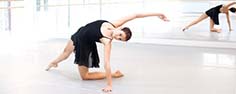
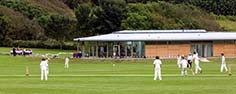
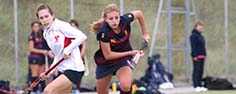
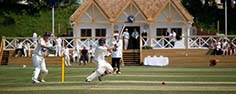
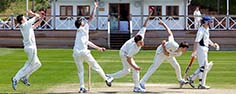
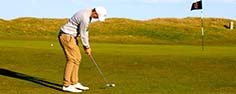
Sport: Rugby, hockey, football, cricket, netball compulsory. Optional:
badminton, football, squash, water polo, swimming, basketball, tennis, sailing,
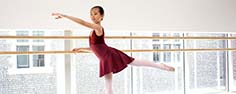
athletics, judo, golf, fencing, cross-country, table-tennis, shooting, dance.
Regular county representation (hockey, cricket, rugby, athletics, swimming).
Activities: Pupils take bronze, silver and gold Duke of Edinburgh’s
Award. CCF strongly encouraged for 2 years at age 14. Community service
optional. Up to 30 activities, eg aerobics, bridge, choral, computing, cookery,
drama, electronics, public speaking, satellite.
School life
Uniform: School uniform worn; dress code in sixth form.
Houses & prefects: Competitive houses. Prefects, head boy/girl, head of
house and house prefects, appointed by the Headmaster and housemaster/mistress.
Religion: Religious worship compulsory, in College Chapel or own place of
worship for those of non-C of E persuasion.
Social: Public-speaking competitions, concerts, participation in Brighton
Festival, Challenge of Industry Conference, Model United Nations. Many organised
trips abroad, including all lower sixth to Europe. Day pupils allowed to bring
own car, bike or motorbike to school (with permission). Meals self-service.
School shop. No tobacco allowed; limited bar in sixth-form centre.
Discipline Pupils failing to produce homework once might expect a
‘Yellow Paper’ signed by the housemaster; those caught smoking cannabis on the
premises would expect expulsion.
Boarding 40% have own study bedroom, 40% share; 20% are in
dormitories of 4–8. Houses of about 65. Resident matron, doctor visits
regularly. Central dining room. Pupils can provide and cook own snacks. Weekend
exeats, by arrangement. Visits to the local town allowed.
Alumni association c/o the Old Brightonians’ Association c/o the
school.
Former pupils Sir Michael Hordern (actor); Sir Vivien Fuchs
(explorer); Sir Humphrey Edwardes-Jones (Air Commodore); Lord Alexander QC
(Chairman of NatWest); Jonathan Palmer (doctor and Formula 1 racing driver);
Professor Lord Skidelsky (economist); Peter Mayle (writer); George Sanders
(actor); Prof Noel Odell (mountaineer and Cambridge Professor); John Worsley
(artist); Rt Rev T J Bavin (former Bishop of Portsmouth); Rear Admiral P G V
Dingemans (Falklands).
|