|
|
►►►其它中学
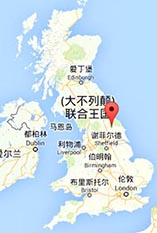
Ampleforth College 艾姆培尔福斯学院,
York YO62 4ER
Tel: 01439 766000
Fax: 01439 788330
Website: www.ampleforthcollege.york.sch.uk
• CO-ED, 13–18, Day & Boarding
• Pupils 548, Upper sixth 137
• Termly fees £3650 (Day), £6840 (Boarding)
• HMC
• Enquiries/application to the Admissions Office (tel 01439 766863)
What it’s like
Established at Ampleforth in 1802, the school adjoins the Benedictine monastery
and abbey of St Laurence in a stretch of magnificent Yorkshire countryside,
close to York. The monastic community descended from the monks who, in 1608,
founded a monastery at Dieulouard in Lorraine. The Headmaster and some of the
teaching staff are monks. The main purpose is to educate Catholics in their
faith and in all branches of learning. Founded as a boys’ school, it is in the
process of becoming co-educational: girls were admitted into the sixth form four
years ago and at 13 from 2004. The plan is to allow both boys and girls to feel
fully a part of a genuinely co-educational experience in an enlarged school; it
is expected to grow to 640 pupils by 2008, with some 170 girls (40 in each year
of the sixth form, 30 in other year groups). The boarding houses are scattered
over a big site and provide comfortable accommodation. Much has been spent on
improving facilities in recent years. A favourable staff:pupil ratio of about
1:8. A sound education is given and examination results are very good. An
unusually strong music staff; musical activities play a major role in the life
of the school. Games and outdoor pursuits are very popular and standards are
high. As a Catholic school, discipline is firm but is exercised in the context
of a strongly supportive community. The partner prep school, St Martin’s
Ampleforth, is at Gilling Castle two miles from the college.
School profile
Scholarships & bursaries 12–23 pa academic scholarships plus some for
music and all-rounders, value 5%–50% fees: most awarded at 13, some at 11 and
16. Variable number of bursaries.
Parents Up to 10% live within 30 miles; up to 25% live overseas.
Head & staff
Headmaster: The Reverend Gabriel Everitt, OSB, in post from January 2004.
Educated at Dundee High School and at the universities of Edinburgh and Oxford.
Previously Housemaster and Head of Christian Theology at Ampleforth.
Teaching staff: 57 full time, 9 part time.
Exam results
GCSE: On average 82 in Year 11; 95% gain at least grade C in 5 subjects.
Average GCSE score 57 (58 over 5 years).
A-levels: 106 in upper sixth; 10% pass in 4 subjects; 79% in 3; and 11%
in 1 or 2 subjects. Average final point score achieved by upper sixth formers
341.
University & college entrance 95% of 2003 sixth-form leavers went on
to a degree course (50% after a gap year), 10% to Oxbridge. 5% took courses in
medicine, dentistry & veterinary science, 20% in science & engineering, 5% in
law, 45% in humanities & social sciences, 5% in art & design, 20% in other
subjects. Others typically go on to other courses or into employment.
Curriculum GCSE, AS and A-levels. 29 subjects to AS/A-level.
Sixth form: Most sixth formers take 4 subjects at AS-level, 3 at A-level;
general studies not taught. 35% take science or maths A-levels; 40% take
arts/humanities; 25% a mixture. Key skills are integrated into sixth form
teaching.
Vocational: Holiday work experience programme.
Special provision: for eg mild handicap, learning difficulties and EFL.
Languages: French, German, Spanish and Italian to GCSE, AS and A-level.
Regular exchanges to France, Germany and Spain, including term-time exchanges
for Year 10 and sixth-form linguists. Initiatives underway with schools in
France, Russia and Eastern Europe.
ICT: Taught both as a discrete subject (1 lesson/week to Year 9) and
across the curriculum. 100 computers for pupil use (10 hours a day), all
networked and with e-mail and internet access. Many pupils (most sixth formers)
have own laptops.
The arts
Music: Over 30% of pupils learn a musical instrument; instrumental exams
can be taken. Numerous musical groups including orchestra, Schola Cantorum,
singers, string, brass, wind ensembles. Organ and choral scholars to Oxbridge,
and conservatoires.
Drama: Theatre studies offered as exam subject. Many pupils are involved
in school productions. 3 former pupils to National Youth Theatre, 1 to Bristol
Old Vic School, 1 to Central School.
Art & design: On average, 30% take GCSE, 12% A-level. Design, sculpture,
photography, CDT also offered.
Sport & activities
Sport: Compulsory, but choice from rugby, cricket, squash, swimming,
tennis, badminton, golf, basketball, fencing, athletics, soccer, hockey,
cross-country, rounders, lacrosse. BAGA, RLSS exams may be taken. Rugby county
representatives and England and Irish internationals.
Activities: Pupils take bronze, silver and gold Duke of Edinburgh’s
Award. CCF and community service optional. D of E community care programme;
strong Cheshire Homes and hospital links. Red Cross, First-Aid exams may be
taken. 35+ clubs, eg natural history, karate, bridge, public speaking, chess,
Red Cross, photography, golf, Westminster.
School life
Uniform: None but dress regulations (jacket and tie, suit on Sundays).
Houses & prefects: House competition on some levels. Prefects and head
boy, appointed by the Headmaster; head of house and house monitors, by
housemasters/housemistresses.
Religion: The Roman Catholic liturgy is integral to the life of the
school.
Social: Theatrical and choral productions and debates with other schools.
Regular exchanges with schools in France and Germany. Schola tours; skiing,
climbing etc abroad. Pupils allowed to bring own bike to school. Some meals
formal. School shop and Abbey shop. No tobacco allowed.
Discipline The aim is to foster sound personal development,
self-discipline and social responsibility. Firm and compassionate responses to
breaches of good conduct. All punishments are dependent on circumstances. Minor
breaches of academic discipline may be dealt with by detentions, extra work or
by placing individuals on special reports. Other misbehaviour may result in the
imposition of minor manual labour, fines or withdrawal of privileges; serious
offences may lead to suspension. The school has clearly stated and firm policies
on eg bullying, drugs and alcohol. The purpose is reform, to help individuals
take responsibility for themselves and for their relationship with their
community.
Boarding 40% have own study bedroom, 10% share with 2–3; 50% are in
dormitories of 6+. 10 houses of 55–65, all single-sex (2 for girls, one is
sixth-form). Local doctor and resident nursing staff. Sixth form can provide and
cook some own food. 1 weekend exeat in the autumn term and half-term in the
autumn and Lent term. Visits to local towns allowed.
Alumni association is run by The Secretary, The Ampleforth Society,
Ampleforth Abbey, York YO62 4ER.
|